
Technology has changed a lot for small businesses over the years. But nothing has changed as much as the recent shift in high performance storage. Now, enterprise NVMe SSDs are making top-notch technology affordable for small businesses.
When I first learned about enterprise NVMe SSDs, I was amazed. These powerful storage solutions were once only for big companies. But now, they’re becoming affordable for small businesses, helping them process data fast and reliably.
The world of storage is changing. Small businesses can now get the same fast, efficient, and reliable storage as big data centers. This change is a big win for tech-smart entrepreneurs.
Key Takeaways
- Enterprise NVMe SSDs are becoming more affordable for small businesses
- High performance storage solutions are now within reach of smaller organizations
- Data center-grade technology can significantly enhance business operational efficiency
- NVMe drives offer superior speed compared to traditional storage options
- Investing in advanced storage technology can provide competitive advantages
What are Enterprise NVMe SSDs?
I’m excited to explore enterprise solid state drives and NVMe storage solutions. They are changing how businesses use computers. NVMe is a new way to handle data that makes computers work much faster.
NVMe uses a fast connection called PCIe to link storage to computers. This is different from old ways of connecting storage. It makes computers run much better for hard tasks.
Understanding NVMe Technology
NVMe storage has big benefits:
- It moves data much faster
- It cuts down on delays
- It handles more tasks at once
- It makes systems more responsive
Key Differences from Traditional SSDs
NVMe SSDs are way different from SATA SSDs. SATA SSDs can only go up to 600MB/s. But NVMe drives can go up to 4,000MB/s. That’s a huge 6.67x speed boost.
Business Application Benefits
NVMe server SSDs are a game-changer for small businesses. They make data processing quicker. They also handle complex tasks and grow with your business.
NVMe technology represents the future of enterprise storage, delivering unprecedented performance and efficiency.
By 2023, NVMe SSDs will be used in 91% of enterprise SSDs. This shows how important they are for today’s computers.
Key Features of Enterprise NVMe SSDs
Enterprise storage solutions have changed how data centers work with advanced NVMe SSDs. These drives are a big step up in storage speed and reliability. They offer businesses unmatched speed and dependability.
Looking at data center SSD options, some key features make enterprise NVMe drives stand out:
Speed and Performance Advantages
Enterprise NVMe SSDs bring amazing performance to business computing:
- Transfer speeds up to 4GB/s in x4-lane configurations
- 5.45x more read bandwidth than traditional SATA SSDs
- 976,000 IOPS (input/output operations per second) interface limit
Endurance and Reliability Metrics
Reliability is key in enterprise storage. These drives have strong performance features:
- Designed for continuous 24×7 operation
- Higher mean time between failures (MTBF)
- Advanced error correction codes (ECC) for data integrity
Advanced Data Protection Capabilities
Data center SSDs now have advanced protection features:
- Power loss protection (PLP) mechanisms
- Support for multiple RAID configurations
- Capacities ranging from 960GB to 7,680GB
Choosing enterprise NVMe SSDs means picking a top-notch storage solution. It combines the latest speed with unmatched reliability.
Why Small Businesses Should Consider NVMe SSDs

In today’s fast-paced digital world, small businesses need top-notch storage solutions. Enterprise NVMe SSDs are a big leap forward for companies wanting to upgrade their IT without spending too much.
Let’s explore why flash storage is key for small businesses aiming to stay ahead.
Cost vs. Performance Benefit Analysis
Looking at NVMe SSDs, the cost vs. performance is very appealing. Here are some important points:
- NVMe drives can transfer data at up to 64,000 megabytes per second
- A single PCIe 4.0 lane offers 2 gigabytes per second throughput
- Average power consumption is significantly lower at 0.08 watts
Impact on Data-Intensive Applications
NVMe SSDs are a game-changer for businesses with complex apps. These drives can handle over 64,000 command queues simultaneously. This means super-fast data processing and better work efficiency.
NVMe technology is not just about speed—it’s about transforming how businesses manage and utilize their digital resources.
Future-Proofing Your Infrastructure
Investing in enterprise NVMe SSDs prepares your business for future tech needs. With about 75% of businesses planning to use NVMe storage, it’s important to stay ahead.
| Storage Type | Max Transfer Speed | Power Consumption |
|---|---|---|
| SATA SSD | 600 MB/s | 0.279 watts |
| NVMe SSD | Up to 7500 MB/s | 0.08 watts |
By picking NVMe SSDs, small businesses can get unmatched performance, efficiency, and growth. This keeps them competitive in a world driven by data.
Top Enterprise NVMe SSDs for Small Businesses
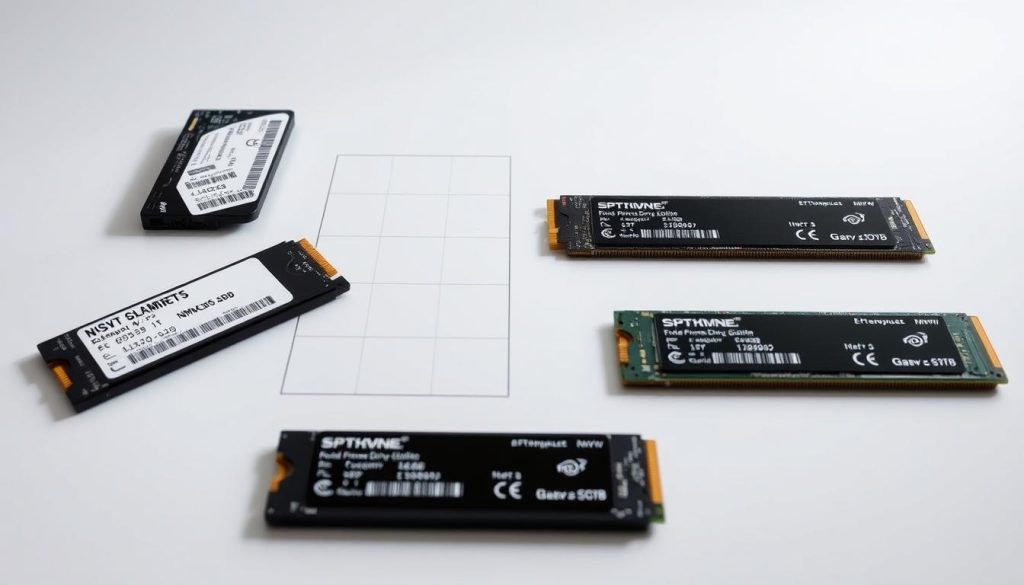
Choosing the right enterprise solid state drive can change your small business’s storage setup. Today, there are powerful server SSDs that offer great performance without costing too much.
When picking an enterprise NVMe SSD, small businesses need to think about a few key things:
- Storage capacity needs
- Performance specs
- What you can spend
- How reliable it is
Comparison of Leading Brands
I’ve looked into the top enterprise NVMe SSD makers to guide you. Here are some top picks:
- Micron 9300 Pro: Has 15.36TB capacity for $1,340
- Intel Optane P5800X: Offers 3.2TB with very low latency
- TeamGroup EX2: A reliable 8TB SSD with fast transfer speeds
User Reviews and Recommendations
Small business owners love these drives for their strong performance and dependability. The Micron 7450 is a favorite for its flexibility.
Price Ranges and Specifications
Here’s a quick look at the prices of enterprise NVMe drives:
- 8TB SATA SSDs: About double the cost of some enterprise options
- 16TB OWC SATA SSD: $2,499.99
- Typical enterprise NVMe drives: $1,000-$2,500 based on size
By picking the right enterprise solid state drive, small businesses can boost their server SSD performance. This can be done without spending too much.
Value of High-Quality Storage Solutions

In today’s fast world, enterprise storage solutions are key to success. My experience with data center SSD technologies shows how high performance storage can change the game for small businesses.
- Dramatically reduces data access times
- Enhances system responsiveness
- Supports complex computational workloads
- Minimizes performance bottlenecks
Enhancing Operational Efficiency
Modern NVMe SSDs are 25 times faster than old storage. This speed means faster workflows and quicker decisions for businesses.
Improving Workflow Productivity
NVMe technologies can handle over 1 million IOPS. The right storage solution becomes a productivity multiplier.
Reducing Downtime Risks
Reliable storage solutions cut down on system failures. Choosing high-performance SSDs with strong error correction and endurance reduces risks and costs.
Budget-Friendly Options for Small Enterprises
Investing in enterprise NVMe SSDs doesn’t have to be expensive for small businesses. High-performance flash storage might seem pricey, but smart choices can find you affordable options. These options offer great value without breaking the bank.
Affordable NVMe SSD Brands to Consider
Small businesses can find many budget-friendly enterprise NVMe SSDs. These options balance performance and cost well:
- Teamgroup MP44: Offers capacities from 512GB to 8TB
- Intel 670p: Competitive pricing with good performance
- Crucial T500: Excellent read/write speeds at reasonable prices
Finding the Best Deals
To get the most from your investment in enterprise NVMe SSDs, try these tips:
- Compare prices across multiple retailers
- Look for seasonal sales and promotional periods
- Check manufacturer refurbished options
Long-Term Cost Efficiency Analysis
When looking at nvme storage solutions, don’t just look at the price. Consider total cost of ownership, including:
| Factor | Impact on Cost |
|---|---|
| Warranty Length | 5 years typical for quality drives |
| Total Bytes Written (TBW) | Higher ratings indicate better durability |
| Performance Consistency | Reduces possible productivity losses |
By picking enterprise NVMe SSDs that fit your business needs, you can get big performance boosts. You won’t have to spend too much.
Integrating NVMe SSDs into Existing Infrastructure
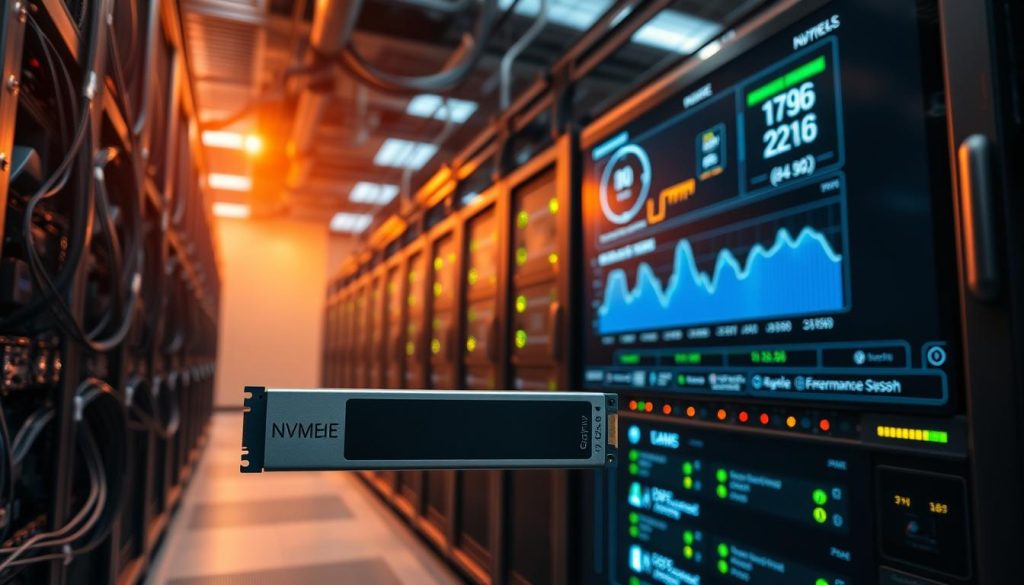
Upgrading your small business’s storage with enterprise solid state drives needs careful planning. NVMe SSD technology boosts performance a lot. But, integrating them well requires knowing about compatibility and migration.
When thinking about upgrading servers, several important factors must be checked:
- Motherboard compatibility with NVMe interfaces
- Available PCIe slot configurations
- BIOS support for NVMe devices
- Current system architecture limitations
Compatibility Considerations
Not all systems can use NVMe SSDs right away. It’s smart to check your hardware details first. Most modern servers can handle NVMe, but older ones might need BIOS updates or hardware changes.
| Hardware Component | NVMe Compatibility Check |
|---|---|
| Motherboard | Verify PCIe 3.0/4.0 support |
| BIOS Version | Update to latest firmware |
| Storage Controllers | Confirm NVMe protocol support |
Installation Tips and Tricks
Installing enterprise solid state drives needs care. Proper handling and static protection are essential. Make sure you’re grounded and work in a clean area when installing your new server SSD.
- Power down the system completely
- Ground yourself to prevent electrostatic discharge
- Carefully insert NVMe SSD into appropriate PCIe slot
- Secure the drive with mounting brackets
- Reconnect power and boot system
Migrating Data Safely
Data migration is the most important part of adding NVMe SSDs. Use professional tools for migration to keep data safe. Make backups before starting to avoid losing data.
“Careful planning prevents performance problems and data risks during SSD migration.” – Storage Technology Expert
By following these steps, small businesses can use NVMe SSD technology well. This will improve their computing setup.
Performance Testing and Benchmarking
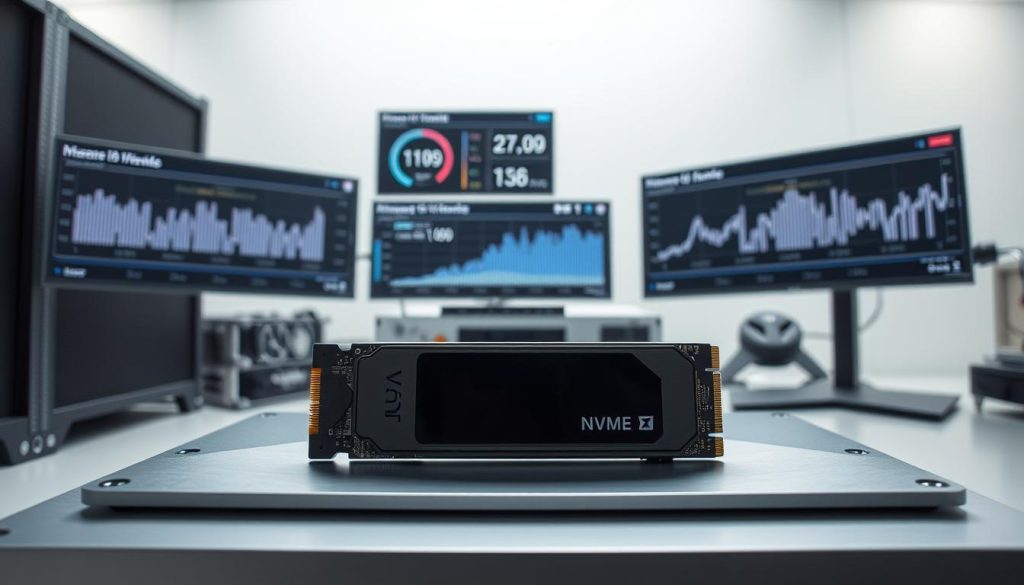
High performance storage needs advanced testing methods. Enterprise NVMe SSD benchmarking looks beyond just speed. It checks real-world use that’s key for data centers.
For checking enterprise NVMe SSDs, use detailed benchmarking tools. These tools give deep insights into how storage performs. They help businesses see the full value of their storage choices.
Essential Benchmarking Tools
- CrystalDiskMark for sequential and random performance tests
- ezFIO for advanced enterprise workload simulations
- ATTO Disk Benchmark for throughput analysis
Interpreting Benchmark Results
Benchmark results show important metrics for enterprise NVMe SSDs. I look at key signs of storage strength:
| Metric | Average Value | Significance |
|---|---|---|
| IOPS | 293,821 | Shows fast data handling |
| Standard Deviation | 8,363.7 | Checks performance steadiness |
| Coefficient of Variation | 3% | Points to steady performance |
Real-World Performance Expectations
Enterprise NVMe SSDs show great performance in different tasks. Performance can change a lot based on the task. Good practices include:
- Pre-conditioning drives before detailed testing
- Checking performance with different IO block sizes
- Testing mixed read/write tasks
- Looking at long-term stability under constant workloads
By grasping these detailed performance traits, small businesses can wisely choose their high performance storage.
Issues and Challenges with NVMe SSDs

Exploring enterprise storage solutions can be tricky, thanks to server SSDs like NVMe. NVMe offers great performance but also unique challenges for small businesses to tackle.
Common Problems and Solutions
NVMe SSDs face several issues that need careful management:
- Performance bottlenecks in traditional file systems
- Complex cache coherency challenges
- Scalability limitations with multiple drives
Managing Temperature and Power Consumption
NVMe drives produce a lot of heat and use more power than old storage tech. Small businesses need to invest in cooling and power management.
| Challenge | Potential Solution |
|---|---|
| High Temperature | Advanced heat dissipation mechanisms |
| Power Consumption | Efficient power management systems |
| Performance Scalability | Strategic drive configuration |
Understanding Warranty and Support Options
Choosing the right warranty is key to protecting your storage investment. Look for coverage that includes:
- Extended hardware replacement terms
- Technical support availability
- Performance guarantee clauses
With the right planning, small businesses can use NVMe technology well and avoid common problems.
Future Trends in NVMe SSD Technology

The world of enterprise NVMe SSD technology is changing fast. It’s bringing new things to small businesses. NVMe drives are set to change how we store data with big improvements.
Innovations on the Horizon
New NVMe SSD tech is making things faster and more efficient. Some big changes include:
- PCIe 5.0 interfaces that can go up to 14,000 MB/s
- 3D NAND tech for more storage in less space
- Better ways to keep things cool
- Designs that use less energy
Predictions for Market Growth
The market for enterprise NVMe SSDs is growing fast. By 2023, over 91% of SSDs in data centers will be NVMe. This shows how good NVMe tech is.
| Technology | Data Transfer Speed | Queuing Capability |
|---|---|---|
| SATA | Up to 600 MB/s | Single queue, 32 entries |
| NVMe | Up to 15,800 MB/s | 64,000 queues, 64,000 entries each |
Implications for Small Business IT
Small businesses will see big benefits from these changes. NVMe drives are getting cheaper. This means they can use top-notch storage without spending a lot.
The future of storage is not just about capacity, but about speed, efficiency, and intelligent data management.
As NVMe tech gets better, small businesses will get faster performance. This will help them do better in a world that’s all about data.
The Critical Role of Storage in Data Strategy
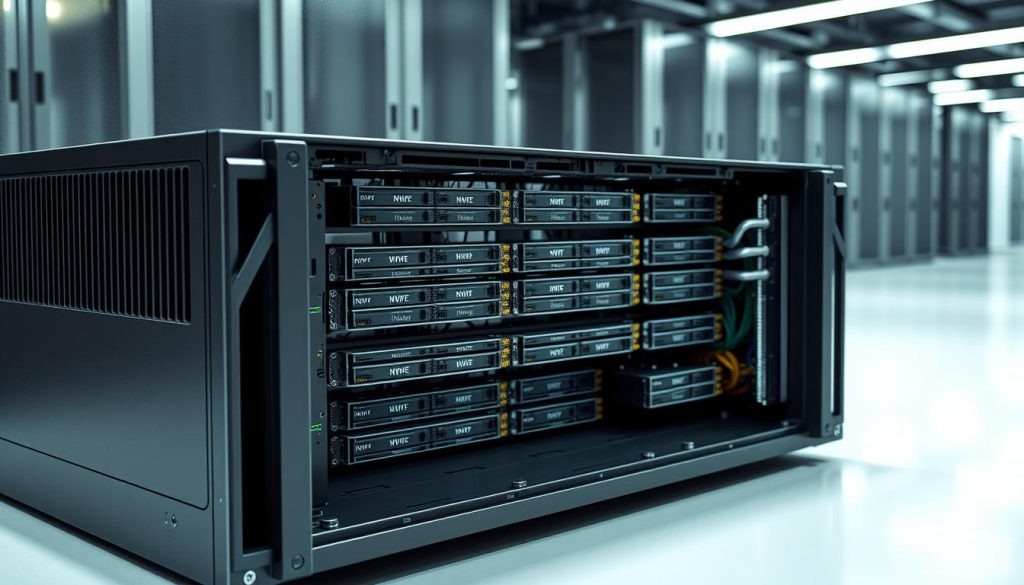
Building a strong data strategy is key to business success today. As a tech expert, I’ve seen how the right storage can change how a company handles data. It’s not just about tech; it’s about setting up a system that helps the business grow and innovate.
Data center SSDs have changed how companies manage information. I’ve learned that planning storage is more than just keeping data safe.
Aligning Storage Solutions with Business Goals
When picking a storage solution, think about these important points:
- Scalability to support business growth
- Performance needs for certain apps
- Budget limits and long-term costs
- How it fits with current IT setup
Emphasizing Data Security and Backup
Keeping your digital stuff safe needs a layered approach. High-performance storage is about fast systems that protect important business info.
Strategic storage is the foundation of digital resilience.
Leveraging Storage Analytics for Insights
Today’s storage solutions do more than just keep data. They give deep insights that help businesses:
- See how data is used
- Make the most of resources
- Guess future storage needs
- Boost overall work efficiency
Seeing storage as a strategic asset can give small businesses a big edge in today’s data world.
Final Thoughts on Enterprise NVMe SSDs
Exploring enterprise NVMe storage solutions has shown me their power. These flash storage technologies are a big leap for small businesses. They offer up to six times the bandwidth of traditional SATA drives, cutting down on wait times.
An enterprise NVMe SSD is more than a storage upgrade. It’s a smart investment in your business’s tech. Small businesses see big benefits like faster database performance and quicker decision-making. For example, the Samsung PM9A3 NVMe SSD has amazing speeds of 6,900 MB/s for reading and 4,100 MB/s for writing.
When looking at storage solutions, think about the long-term benefits. Enterprise NVMe SSDs are super reliable, with up to 3 million hours of mean time between failures. This means less downtime and a solid base for your digital world. Choose wisely based on your needs and budget.
For small business owners, enterprise NVMe SSDs are a strategic move. They help your business keep up with complex data needs efficiently. Investing in high-performance flash storage puts you ahead in the game.
FAQ: Enterprise NVMe SSDs for Small Businesses
What exactly is an enterprise NVMe SSD?
An enterprise NVMe SSD is a high-performance solid-state drive for professional use. It offers faster data transfer, lower latency, and reliability. It uses the NVMe interface for faster communication with computers.
How do enterprise NVMe SSDs differ from consumer-grade SSDs?
Enterprise NVMe SSDs have higher endurance and better error correction. They also have enhanced data protection and longer warranties. They’re made for heavy use, unlike consumer SSDs for lighter use.
Are enterprise NVMe SSDs worth the investment for small businesses?
Yes! They improve efficiency, reduce downtime, and boost productivity. They offer faster data access and multitasking, making them a good investment for small businesses.
What performance improvements can I expect from an enterprise NVMe SSD?
You can expect read/write speeds up to 5-7 times faster than SATA SSDs. This means faster app loading, data transfers, and system responsiveness. They’re great for tasks like database management and video editing.
How do I know if my small business needs an enterprise NVMe SSD?
Upgrade if your business uses data-intensive apps, experiences slowdowns, or needs quick data access. Design, engineering, finance, and professional services can benefit from their performance.
What should I consider when selecting an enterprise NVMe SSD?
Look at storage capacity, performance, endurance, warranty, and compatibility. Choose one that fits your business needs and future growth.
Are enterprise NVMe SSDs difficult to install?
Most are easy to install. Check motherboard compatibility, ensure the correct M.2 slot, and update BIOS if needed. Manufacturers provide guides, and IT pros can help with complex setups.
How long do enterprise NVMe SSDs typically last?
They’re built for longevity, lasting 5-7 years or 1-3 petabytes written. Lifespan depends on usage, workload, and environment. Proper care and following guidelines can extend their life.